Tuesday, March 29, 2016

3 Ways to a Girl's Party Dress

Three dresses, similar looks! Any popular fashion look can be achieved by any number of sewing techniques. The following three patterns (dating from the late 1940s to early 1950s) each feature a similarly-looking dress, but yet each uses a different method to achieve the look, in this case a scalloped yoke and scalloped lantern sleeves.

Hollywood 1616 (view 2, specifically) simply applies trim along the bodice and along the middle of the puff sleeves to produce a faux scalloped yoke and faux scalloped lantern sleeves effect. Cute and easy-peasy to sew!


Mail Order 3856 from The American Weekly magazine actually has a scallop-edged yoke and two-piece lantern sleeves that are joined with a scalloped seam! Seams are joined with a French, or lapped, seam, in case you were wondering! Lace trims the seams of the yoke and sleeves. Very cute! While not difficult to sew, the scalloped seams take a bit more effort.


McCall's 1654 is heirloom-quality and features a button-on guimpe (chemisette) to achieve the effect. The upper bodice and upper sleeves button to the scallop-edged bodice and scallop-edged lower sleeves. Dainty hand-embroidered roses accent the lower bodice and lower sleeves. Exquisite and takes careful sewing!


Now, which dress would you sew?

Sunday, March 27, 2016

Happy Easter, Happy Spring: 1926 Style Show Contest

Happy spring to all, and here is a peek at fashion from 1926 that I hope will help you forget about any unseasonal spring weather you may be experiencing.

This wonderful find, a "Style Show" catalog from the Sharood Company, a mail order house located in Minneapolis, features spring and summer fashion for 1926. The cover is graced with a lovely frock with ribbon ties at the neckline, cuffs, and hips.


Check out the new spring fabrics and colors for 1926!


Here are the prize winners in the style show contest! First prize of $500 is quite a generous prize for that time period. Well it would be a decent prize today! I find the number of prize winners very interesting - and generous. Imagine all those happy customers who won a prize.


And here is the grand prize winner - with her winning letter, and the response from Sharood's. 


To make it easier, here is an enlarged view of her letter. I love the details of the ensemble she chooses and her rationale for her choices of coat, dress, hat, hose, and shoes.

\\

And here is "her prize winning costume". Totally lovely! I think the coat and the hat are my favorites. And the colors - "pencil blue" and gray - I really like the color combination. What do you like about the winner's ensemble? And any guesses on what color "pencil blue" actually is? ;)


Friday, March 18, 2016

Miss Lillian's Postcards - Miss Lillian Goes to the World's Fair in the Summer of 1909

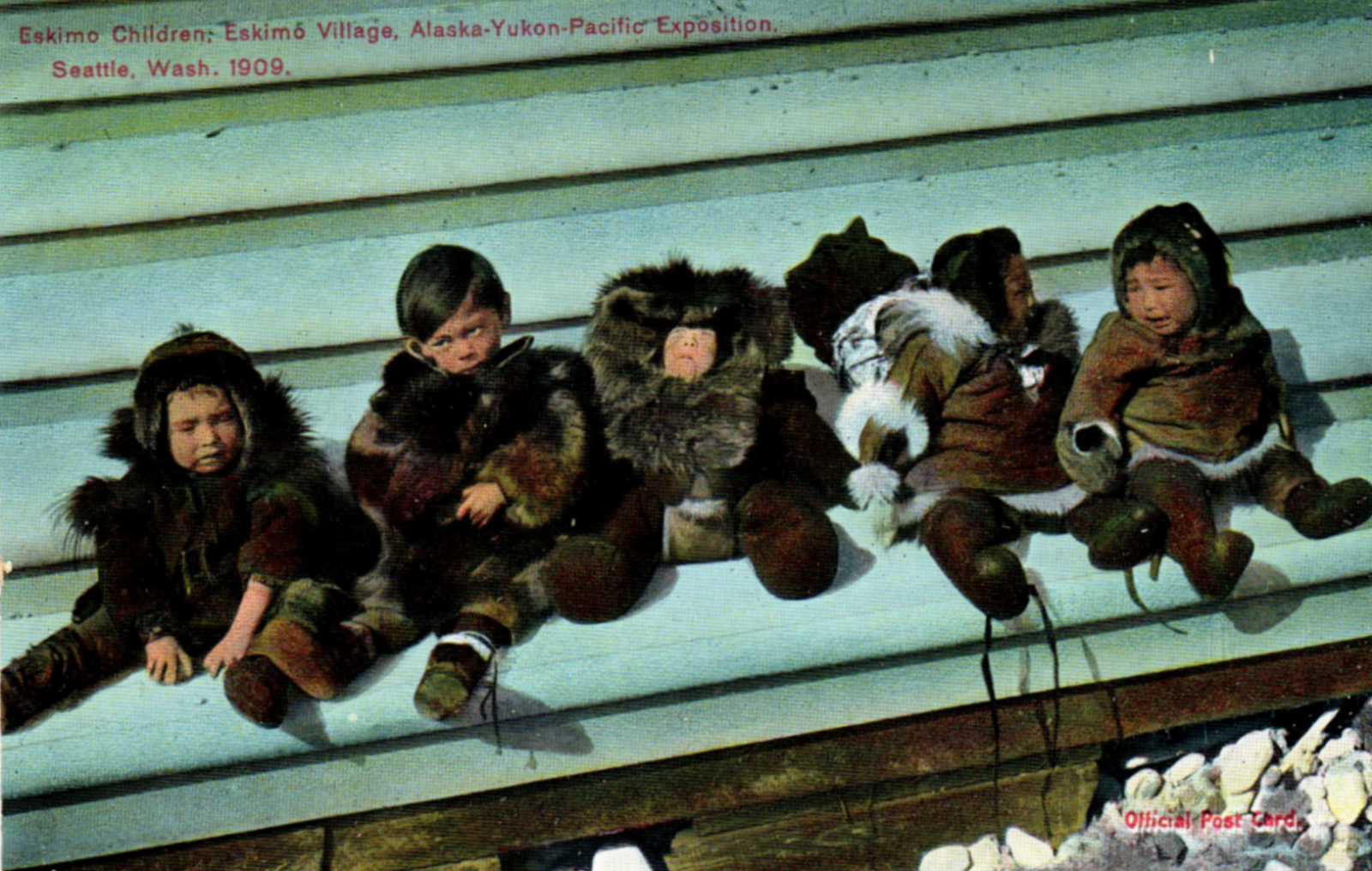
Such excitement! Opening on June 1, 1909, the Alaska–Yukon–Pacific Exposition was a world's fair hosted by Seattle to publicize the development of the Pacific Northwest, including Canada, Alaska, as well as countries of the Pacific rim. In Miss Lillian's postcard collection are 24 official postcards from the A-Y-P, sporting its official seal. Since personal cameras were a rare thing in those days, the purchase of official postcards was the best thing to commemorate a special outing. 

I can image Lillian taking the trolley to the fairgrounds, which were located on the campus of the University of Washington. This was such a huge event, with so many special events scheduled throughout the summer and so many fabulous things to see. I wouldn't be surprised if she went several times over the course of the fair, which closed on October 12.


 A series of official postcards featured scenic sights of Washington state and Alaska.


Tuesday, March 15, 2016

In Search of Style: Finding Inspiration for a 1940s Girl's Dress

The Pattern: This is a classic girl's dress from 1948, with a sweet yoke and short sleeves. It's perfect for every day and for party occasions too!

McCall 7366


The Clippings: Tucked into this pattern, though, were some interesting clippings and hand-made pattern pieces! Both clippings show a great use of contrast fabrics to add a bit of spark.


This second clipping is from an ad for a mail order pattern. Rather than simply order the mail order pattern, though, the sewist chose to use it for inspiration instead, Note the yoke's zig-zag detail.


And also tucked inside the pattern were the hand-made pattern pieces that would create the bodice front! So we know what she sewed. :)


Note the references to the holidays in the newspaper. I wonder if the dress was sewn for Christmas specifically. The ads for cars are interesting - all are for 1940s models, with 1949 the latest model listed!

Thursday, March 3, 2016

Home Sewing Tips from the 1920s - A Frock Trimmed with Self-Fabric Plaits

While this tip from Ruth Wyeth Spears and the 1920s describes a plaited (pleated) trimming for a "young girl's frock", I think this excellent tip would also apply to a frock for any age!

In her usual marvelous style, Ruth guides her home sewists with clear illustrations and precise steps. And note her tip for the novel feature of flipping the hem to the outside and trimming it in place with the plaiting (pleating). So clever and so simple - I love it!


Ruth recommends a crisp fabric as most effective, and says the sketch is of "changeable pink taffeta". I can picture this frock in pink taffeta - can you?

Monday, February 29, 2016

Scraps from the Past: 1950s Girl's Shirtwaist Dress in Brown Taffeta

The Pattern: McCall's 4016 from 1957 provides this cute and classic summer shirtwaist dress for a growing girl.


The Scrap: Scraps of shiny taffeta in a warm brown were tucked inside the envelope of this pattern. Can you visualize this dress in this fabric? It would be a party dress for sure!


Saturday, February 27, 2016

Miss Lillian's Postcards: A Vintage Tweet from Chile!

Sender: Jerome C. Huff
Addressee: Miss Lilian M. Maguier [sic], 1902 G Terry Ave, Seattle, Washington, United States of America
Postmark: Talcahuano Chile
Date: January 7, 1909
Image: Jardin del Palacio en el Parque Cousino, Concepcion, Chile


This beautiful, and dare I say it, rare postcard from the country of Chile in South America (probably worth a few dollars!) provides an image of the Jardin del Palacio en el Parque Cousino - the Palace Garden in the Isidora Cousiño Park. The park is also called Lota Park (Lota de Parque) because it is located in the port city of Lota, Chile, overlooking the bay. It was designed between 1862 and 1872 and includes trees, gardens, statues, and pools. Guides dress in the style of the 19th century and recall the time period of Isidora and Luis Cousiño, who oversaw much of its development. The park also includes a zoo, a meteorological observatory and a conservatory with tropical plants. It contains the tomb of Carlos Cousiño, the son of Isidora and Luis. Carlos also worked on the development of the park, and was alive at the time of this postcard. The "Cousiño Palace", home of Isadora and Luis, and the "Palacio" referenced in the postcard, was located within the park. Though the home itself was demolished in the 1960s, the adjacent gardens remain.

The view in the postcard is of the central part of the park where the palace once stood. Below is a current image from the park.


If you speak Spanish, check this Wiki article for the history of the park. For the Spanish-challenged, this YouTube video provides a long tour of the park.Or this one! This YouTube video provides a very quick tour of the park.

Message:
Dear friend,
Am far away
and still going
farther, we never
stop to think any
more.
Jerome C. Huff


This postcard from Lillian's collection is one of my favorites. It is special because it comes from a friend who is traveling in a foreign country. Chile was not a common destination for travel in those days. It is also special for the writer's beautiful penmanship. But most especially it is a treasure because of its simple yet poignant message. It almost reads like a Haiku or poem. It is such a thoughtful, pensive message. It speaks of loneliness, and reflection on decisions in life. Perhaps he is just homesick, or perhaps lonely. We will never know.  But his message still speaks to the heart after more than a century.